
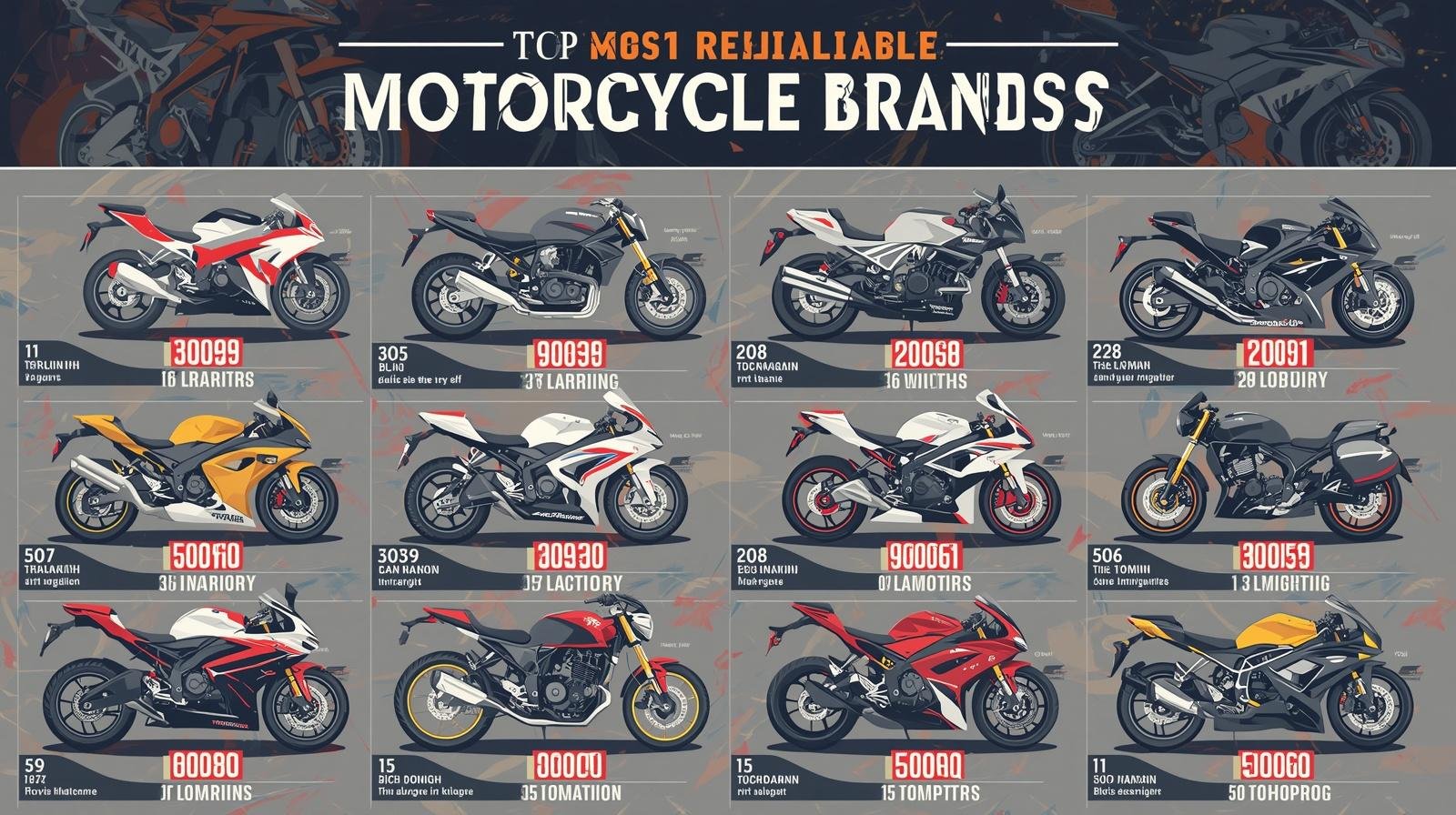
When you are about to spend your hard-earned money on a motorcycle, reliability is probably the one word that sits at the top of your mind. You want a bike that starts every single morning without drama, handles the daily grind without constant trips to the mechanic, and keeps going mile after mile without demanding expensive repairs or leaving you stranded on the side of the road. Reliability is not glamorous. It does not make for exciting magazine headlines or jaw-dropping social media videos. But ask any experienced rider what they value most in a motorcycle after years of ownership, and the word reliable will come up every single time.
The good news is that the global motorcycle industry in 2026 produces machines of genuinely high quality across a wide range of price points. However, not all brands are created equal when it comes to long-term dependability, build quality, parts availability, and the kind of track record that comes from decades of real-world use by millions of riders around the globe.
This guide ranks and reviews the top ten most reliable motorcycle brands in the world, with honest assessments of what makes each one trustworthy and who each brand is best suited for. Whether you are buying your first bike or your fifth, this is the information that actually matters.
What Makes a Motorcycle Brand Truly Reliable
Before getting into the rankings, it is worth clarifying what reliability actually means in the context of choosing a motorcycle brand. True reliability is not just about whether a brand has ever produced a good bike. It is about consistency — the ability to manufacture machine after machine, year after year, that performs as expected, requires only routine maintenance within normal service intervals, and does not develop systematic faults or require expensive recalls.
Reliability also includes the availability and affordability of spare parts. A brand might produce an exceptional motorcycle, but if parts are difficult to source or prohibitively expensive when something eventually does need replacing, the real-world ownership experience suffers. The most reliable brands maintain strong global supply chains for parts and a well-trained dealer network capable of servicing their machines correctly.
Owner satisfaction surveys, industry reliability studies, long-term ownership reports from enthusiast communities, and the professional opinions of experienced mechanics who work on multiple brands every day all contribute to the picture of which motorcycle brands genuinely deserve their reputations for reliability. The ten brands in this guide have earned their places through consistent performance across all of these measures.
- Honda
Honda is not simply the most reliable motorcycle brand in the world. It is the standard by which every other brand’s reliability is measured. This Japanese manufacturer has built its entire global reputation on the principle that motorcycles should work, consistently and without complaint, for as long as their owners need them to. That philosophy is embedded in every stage of Honda’s design, engineering, and manufacturing process, and the results speak for themselves in showrooms, service records, and roadside breakdown statistics around the world.
Honda motorcycles are found in more countries, ridden by more people, and trusted with more critical transportation responsibilities than those of any other manufacturer. From the iconic Super Cub, which has sold more than any other motorised vehicle in human history and continues to run reliably in the most demanding conditions imaginable, to the Gold Wing touring flagship and the Africa Twin adventure machine, Honda produces reliable motorcycles across every single segment of the market.
What separates Honda from competitors who also aspire to reliability is the combination of conservative engineering, meticulous quality control, and a genuine commitment to getting the basics right before chasing performance or style. Honda is rarely first to market with a new technology, but when they adopt something new, it works correctly and continues working correctly for years. For anyone who wants a motorcycle that simply will not let them down, Honda is always the first name to consider.
- Yamaha
Yamaha is Honda’s closest competitor for the title of the world’s most reliable motorcycle brand, and in the experience of many riders and mechanics, it is genuinely interchangeable with Honda at the top of any reliability ranking. Yamaha’s engineering philosophy mirrors Honda’s commitment to getting the fundamentals right, and the result is a range of motorcycles that are consistently excellent across decades of ownership.
The Yamaha FZ and MT series, the legendary V-Max, the R series sportsbikes, and the enduring XT range of adventure bikes have all demonstrated the kind of long-term dependability that builds genuine brand loyalty. Yamaha’s parallel-twin engines in particular have established a remarkable reputation for longevity, with many examples running well past the 100,000-kilometre mark with nothing more than routine maintenance.
Yamaha also benefits from one of the strongest global dealer and parts networks outside of Honda, which means that wherever in the world you are riding, getting your Yamaha serviced correctly and sourcing genuine spare parts is rarely difficult. For riders who want Honda-level reliability with perhaps a slightly more engaging and characterful riding experience, Yamaha is the natural first alternative.
- Kawasaki
Kawasaki rounds out the Japanese Big Four’s dominance at the top of any reliability ranking, and in some specific segments — particularly large-displacement four-cylinder machines — Kawasaki’s engineering reputation is arguably unmatched. The Kawasaki Z series, the Ninja range, and the legendary Versys adventure bikes have all built devoted followings based on their combination of performance, longevity, and straightforward ownership experience.
The Kawasaki ZX-10R and its road-going siblings have demonstrated that high-performance motorcycles do not have to sacrifice reliability in the pursuit of speed, provided the engineering is done properly. Kawasaki’s inline-four engines are known for their durability and their ability to maintain performance over very high mileages when serviced correctly.
One of Kawasaki’s particular strengths from a reliability perspective is its relatively conservative approach to electronics and complexity. While the brand has embraced modern rider aids and connectivity where appropriate, Kawasaki tends to implement these systems in ways that are straightforward to service and diagnose, keeping the overall ownership experience manageable for both owners and independent mechanics.
- Suzuki
Suzuki occupies a fascinating position in the reliability conversation. Among professional mechanics and long-term motorcycle owners, Suzuki machines are frequently cited as some of the most dependable motorcycles ever produced, yet the brand does not always receive the same level of public recognition for reliability as Honda or Yamaha. This is partly a marketing story rather than an engineering one — Suzuki simply does not shout about its achievements as loudly as some competitors do.
The Suzuki GSX-R series, the V-Strom adventure twins, and the enduring DR and DRZ off-road range all have exemplary long-term reliability records. The V-Strom, in particular, has become something of a benchmark in the adventure touring segment, with owners regularly reporting exceptional trouble-free mileage and a general absence of the systemic issues that can plague more complex machines.
Suzuki’s engineering approach emphasises mechanical simplicity and proven solutions over novelty, which translates directly into reliable performance that rewards long-term ownership. Parts are widely available and affordable, and the engines respond well to the basic maintenance practices that any conscientious owner can learn to perform themselves.
- BMW Motorrad
BMW Motorrad is the highest-placed European manufacturer in this ranking, and its inclusion among the world’s most reliable motorcycle brands reflects a significant improvement in build quality and long-term dependability over the past decade. Earlier generations of BMW’s motorcycles, particularly the complex K series, had reputations for electrical gremlins and expensive servicing requirements that deterred reliability-focused buyers. The brand has worked hard to address these issues, and the current generation of BMW motorcycles is genuinely impressive in terms of dependability.
The R series boxer-twin machines, including the R 1300 GS in its latest form, have proven themselves to be remarkably durable touring and adventure machines capable of extraordinary mileage when maintained correctly. BMW’s commitment to long service intervals and robust engineering in recent models has significantly enhanced the brand’s reliability credentials.
The caveat with BMW is that when things do go wrong, repairs can be more expensive than with Japanese alternatives, and not every independent mechanic has the diagnostic tools and training to work on newer BMW models effectively. For riders who have access to a good BMW dealer or authorised service centre, this is less of an issue, but it is worth factoring into the total ownership calculation.
- KTM
KTM’s inclusion in a list of the world’s most reliable motorcycle brands might surprise riders who associate the Austrian manufacturer primarily with high-performance racing machines and the demanding riding they support. But KTM has matured significantly as a manufacturer in recent years, and the reliability of their road-going models has improved dramatically alongside the growth of their dealer network and parts infrastructure.
The Duke series, the Adventure range, and the RC sportsbikes all have competitive reliability records when maintained according to the manufacturer’s schedule. KTM’s engines are high-revving and performance-focused, which means that following service intervals diligently matters more with KTM than with more conservatively tuned Japanese alternatives. Owners who stay on top of their maintenance typically enjoy excellent long-term results.
KTM’s global expansion has been accompanied by significant investments in dealer training and parts availability, which have addressed one of the brand’s historical weaknesses in markets outside Europe. In 2026, buying a KTM in most major markets means having access to proper support, which makes the reliability equation considerably more favourable than it was a decade ago.
- Royal Enfield
Royal Enfield deserves its place on this list for reasons somewhat different from those of the Japanese and European brands above it. This Indian manufacturer does not produce the most technically sophisticated motorcycles in the world. What Royal Enfield does produce, consistently and in enormous volumes, is a range of simple, honest, and remarkably durable motorcycles that have proven themselves over decades of use in some of the most demanding conditions on earth.
The Himalayan adventure bike and the classic Bullet and Meteor series have built genuine reputations for mechanical toughness in markets where roads are rough, maintenance facilities are basic, and riders depend on their motorcycles for essential daily transportation. The simplicity of Royal Enfield’s engineering is a deliberate strength rather than a compromise — fewer complex systems mean fewer things that can go wrong and simpler repairs when they do.
For riders who value honest, no-frills dependability and the ability to maintain their own machine with basic tools and skills, Royal Enfield offers something that more technologically complex brands genuinely cannot match. The brand’s rapid global expansion has also significantly improved parts availability and service support in markets outside India.
- Triumph
Triumph is the British motorcycle industry’s great survival story, and the modern incarnation of the brand from Hinckley has built a strong reputation for reliability that would have seemed unlikely when the company re-emerged in the early 1990s. Today’s Triumph motorcycles are well-engineered, properly quality-controlled, and backed by a dealer network that has grown steadily alongside the brand’s expanding model range.
The Tiger adventure series and the Street Triple and Speed Triple naked bikes have particularly strong reliability records, with owner communities reporting generally excellent long-term dependability from the triple-cylinder engines that have become Triumph’s signature mechanical identity. These motors combine genuine character with a level of everyday reliability that makes them practical choices for daily riding alongside weekend enjoyment.
Triumph’s main reliability challenge remains the cost of parts and servicing compared with Japanese alternatives. The brand’s premium positioning is reflected in the prices of genuine spare parts and dealer labour rates, making it worthwhile to find a good independent mechanic familiar with modern Triumph models for cost-conscious owners.
- Ducati
Ducati’s inclusion at number nine in a reliability ranking will raise eyebrows among riders who associate the Italian brand primarily with temperamental desmodromic valve systems, frequent service requirements, and the kind of passionate but demanding ownership experience that Ducati enthusiasts embrace as part of the brand’s character.
The honest picture of Ducati’s reliability in 2026 is more nuanced. The modern Ducati Multistrada and Scrambler ranges have reliability records that compare reasonably well with those of European competitors, and the brand’s acquisition by Volkswagen Group has brought manufacturing discipline and quality-control standards that have measurably improved build quality across the range.
Ducati remains a brand for riders who are genuinely passionate about the motorcycles it produces and are willing to invest more in servicing than owners of Japanese alternatives would expect to pay. The valve service intervals on desmodromic engines are a real cost that needs to be budgeted for. But for riders who accept these realities, modern Ducatis are considerably more dependable than their historical reputation might suggest.
- Harley-Davidson
Harley-Davidson closes this list of the most reliable motorcycle brands in a position that reflects both the brand’s genuine strengths and its specific limitations. Within the cruiser and touring segment, Harley-Davidson motorcycles are remarkably durable machines that accumulate extraordinary mileages in the hands of dedicated owners who maintain them properly and understand their particular engineering character.
The Milwaukee-Eight engine series that powers most of the current Harley lineup has proven itself as a genuinely dependable powerplant with a strong long-term track record among owners. Touring models like the Road Glide and Street Glide regularly exceed very high mileages without requiring major mechanical intervention beyond normal service items.
Harley-Davidson’s main reliability limitation stems from the complexity and cost of its electrical and infotainment systems on newer models, which can be expensive to diagnose and repair outside authorised dealerships. In the traditional mechanical reliability sense, Harley remains a genuinely strong performer within its segment.
Quick Reliability Comparison Checklist
Honda: Best overall reliability, widest parts network, suits all riders Yamaha: Near-Honda reliability with more riding character, excellent value Kawasaki: Best inline-four durability, strong performance reliability Suzuki: Underrated reliability, excellent long-term value BMW Motorrad: Best European reliability, higher service costs KTM: Strong reliability when maintained correctly, improving support network Royal Enfield: Best for simple mechanical dependability and self-maintenance Triumph: Strong triple-cylinder reliability, premium service costs Ducati: Improved modern reliability, requires committed maintenance investment Harley-Davidson: Excellent traditional mechanical reliability within cruiser segment
Practical Tips for Keeping Any Motorcycle Reliable
The single most powerful thing you can do to extend the life and reliability of any motorcycle, regardless of brand, is to follow the manufacturer’s recommended service schedule without exception. Oil changes, filter replacements, valve clearance checks, and brake fluid changes are not suggestions — they are the maintenance foundation that keeps a motorcycle running correctly over the long term.
Use quality lubricants and genuine or reputable aftermarket parts when servicing your motorcycle. Using cheap oil or non-specification parts to save a small amount of money in the short term often leads to expensive problems later. The cost difference between quality and budget consumables is trivial compared to the repair bills that can result from using inferior products.
Store your motorcycle correctly when it is not in use for extended periods. A battery maintenance charger, fuel stabiliser, and proper cover make a significant difference to how well a bike returns to service after weeks or months of standing. Neglecting storage preparation is one of the most common causes of avoidable problems with otherwise reliable machines.
Build a relationship with a trustworthy, experienced mechanic who knows your specific brand well. This is worth more than almost any other investment in your motorcycle’s long-term reliability, because a good mechanic catches small issues before they become expensive ones and gives you honest advice about what your bike actually needs.
Frequently Asked Questions
Which motorcycle brand has the best reliability record overall?
Honda consistently tops reliability surveys and long-term ownership satisfaction studies across most markets and most motorcycle categories. Their commitment to conservative engineering, rigorous quality control, and comprehensive global parts and service support makes them the benchmark against which all other brands are measured when reliability is the primary consideration.
Are Japanese motorcycle brands really more reliable than European ones?
As a general pattern, yes — Japanese brands have historically demonstrated higher average reliability scores in independent surveys and ownership studies than European manufacturers. However, the gap has narrowed significantly in recent years, and modern BMW, Triumph, and even Ducati motorcycles are considerably more reliable than their predecessors. The choice between Japanese and European should be based on the overall ownership package, not reliability alone.
Does a more expensive motorcycle mean it will be more reliable?
Not necessarily, and in some cases, the opposite can be true. More expensive motorcycles often incorporate more complex technology, which can introduce more potential failure points. Some of the most reliable motorcycles in the world, including Honda’s Super Cub and Yamaha’s commuter range, are among the most affordable. Price is more closely related to performance, features, and brand positioning than to long-term reliability.
How important is the dealer network when choosing a reliable motorcycle brand?
Very important, and often underestimated. A motorcycle that develops a problem can only be repaired as quickly and well as the available service infrastructure allows. Buying a brand with a strong local dealer network and well-trained technicians means faster repairs, access to genuine parts, and warranty support that protects your investment. In remote areas, especially, choosing a brand with wide service coverage is a practical safety net.
Can regular maintenance really make a significant difference to long-term motorcycle reliability?
Absolutely, and this cannot be overstated. Many of the reliability differences that owners attribute to brand quality are actually the result of maintenance habits. A Honda maintained poorly will become unreliable. A Ducati maintained diligently will run for many years without major problems. The most reliable motorcycle in the world is the one that receives consistent, correct maintenance from an owner who treats their machine with care and attention.
Conclusion
The top ten most reliable motorcycle brands in the world share a common quality beneath their different nationalities, price points, and engineering philosophies: they have all earned their reputations through consistent performance in the hands of real riders over real miles in the real world. Honda leads the list by a clear margin, Yamaha and Kawasaki follow closely, and the rest of this ranking represents genuinely trustworthy choices for riders who prioritise dependability in their motorcycle purchase.
Reliability matters because motorcycles are not just recreational objects. For many riders around the world, they are essential daily transportation. For others, they represent freedom, adventure, and experiences that depend on a machine that will keep going when it is needed most. Choosing from the most reliable motorcycle brands in the world is not the most exciting decision in the purchase process — but it is often the most important one.
Buy wisely, maintain consistently, and the right motorcycle from the right brand will reward you with years of trouble-free riding that makes every kilometre worthwhile.


Leave a Reply