
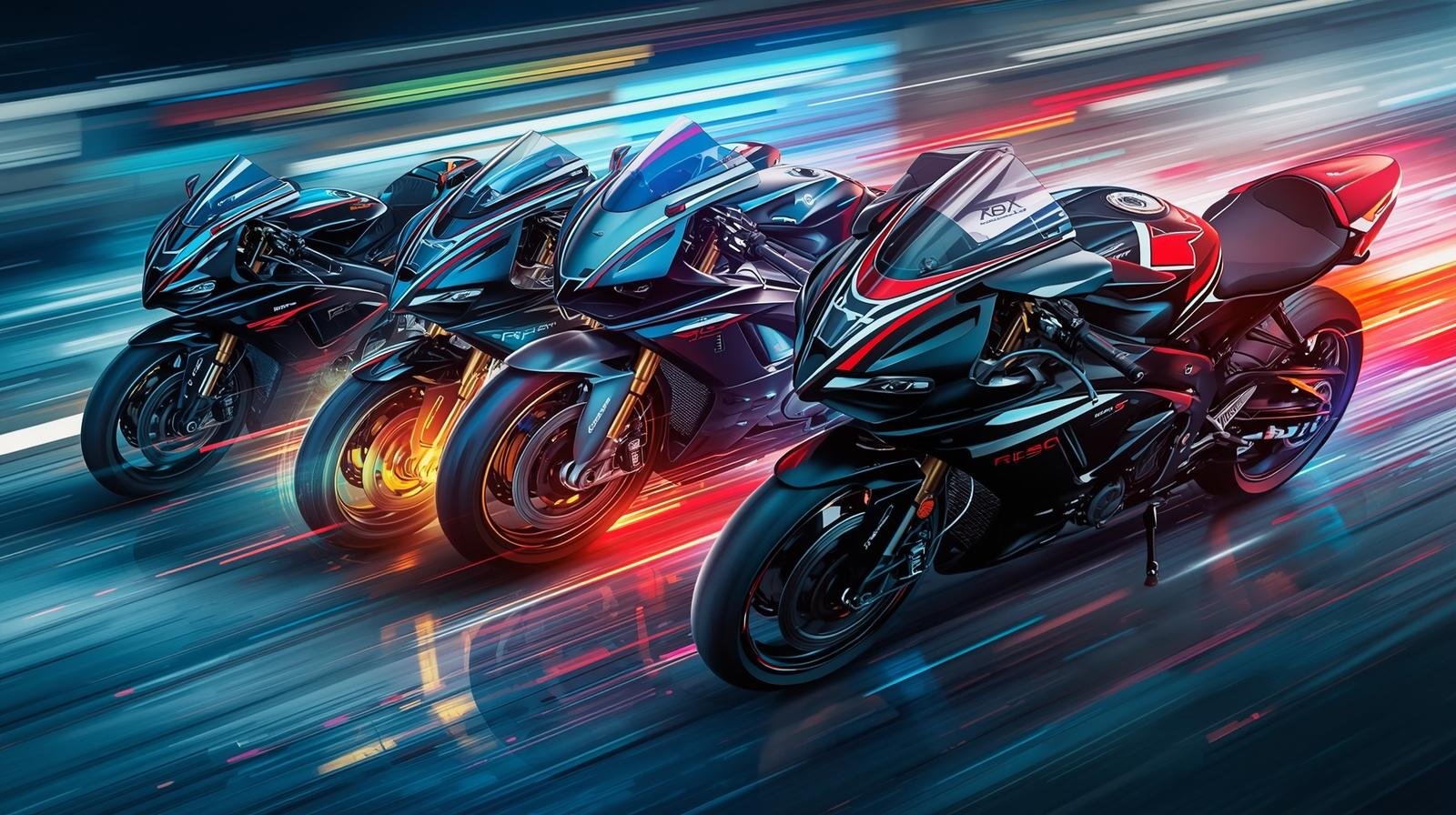
Speed has always been at the heart of motorcycling culture. From the earliest days of competitive racing on closed circuits to the extraordinary hyperbikes of today that blur the line between road-legal transport and aerospace engineering, the pursuit of velocity on two wheels has driven some of the most remarkable feats of mechanical ingenuity in the history of human transportation. There is something fundamentally compelling about a motorcycle at maximum speed, something that connects the raw physics of power, weight, and aerodynamics to a deeply human hunger for the experience of going as fast as anything on the road can go.
The fastest motorcycles in the world in 2026 represent the absolute pinnacle of what is currently possible in two-wheeled engineering. They are machines built by teams of engineers who have pushed materials science, aerodynamics, and powertrain development to boundaries that feel almost fictional when you read the numbers. Top speeds that exceed 300 kilometres per hour on production machines. Power outputs that rival small sports cars. Weight figures that have been shaved to the mathematical minimum by the use of carbon fibre, titanium, and exotic alloys throughout.
This guide covers the top ten fastest motorcycles in the world with a detailed speed comparison, honest assessment of what makes each machine extraordinary, and the real-world context that helps you understand what these numbers actually mean for the riders brave and skilled enough to explore them.
Understanding What Makes a Motorcycle Fast
Before exploring the specific machines, it is worth understanding the engineering factors that determine a motorcycle’s top speed and overall performance. Speed on a motorcycle is not simply a function of engine power, although power is obviously the foundation of the equation. It is the interaction of multiple factors working together that determines whether a machine can achieve and sustain extreme velocities.
Power-to-weight ratio is the most fundamental performance metric in motorcycle engineering. A motorcycle with 200 horsepower and a dry weight of 170 kilograms has a power-to-weight ratio that simply cannot be matched by any production car, which is why the fastest motorcycles in the world accelerate with an intensity that leaves even very fast cars behind in straight-line performance. Reducing weight is as valuable as adding power, and the manufacturers of the fastest motorcycles pursue both objectives simultaneously and obsessively.
Aerodynamics becomes increasingly critical as speed increases, because aerodynamic drag grows with the square of velocity. At 100 kilometres per hour, aerodynamic drag is a significant but manageable force. At 200 kilometres per hour, it becomes the dominant factor limiting further acceleration. At 300 kilometres per hour and beyond, every square centimetre of frontal area and every surface that disturbs smooth airflow over the machine represents a meaningful penalty in top speed. The most sophisticated fast motorcycles in the world are developed with the same computational fluid dynamics tools used by Formula One teams.
Tyre technology is the often-overlooked limiting factor in motorcycle speed. At extreme velocities, the heat generated in tyres and the centrifugal forces acting on them approach the limits of what current tyre technology can safely manage. The tyre manufacturers who supply the world’s fastest production motorcycles invest enormous resources in developing compounds and constructions capable of operating reliably at these conditions, and the machines themselves are typically limited to a maximum speed at which their tyres are certified to operate safely.
- Dodge Tomahawk Concept – Theoretical 676 km/h
No speed comparison of the fastest motorcycles in the world is complete without acknowledging the Dodge Tomahawk, which occupies a category entirely its own in the conversation about motorcycle velocity. Powered by a Viper V10 engine producing over 500 horsepower and installed in a four-wheeled motorcycle-style chassis, the Tomahawk was never intended as a production vehicle in the conventional sense, and its theoretical top speed figure of 676 kilometres per hour has never been achieved or meaningfully tested.
The Tomahawk exists primarily as a statement of engineering ambition rather than a practical machine, and Dodge produced only nine examples for display purposes. However, its presence in any fastest motorcycle discussion is warranted precisely because it demonstrates what becomes possible when the conventional limits of motorcycle engineering are set aside entirely in favour of pure theoretical performance exploration. It is the thought experiment at the end of the speed conversation.
- MTT Turbine Superbike Y2K – 365 km/h
The MTT Y2K holds the distinction of being the fastest production motorcycle ever certified for road use by Guinness World Records, and it achieves this distinction through one of the most radical engineering decisions in motorcycle history: the use of a Rolls-Royce Allison turboshaft helicopter engine as its powerplant.
The turbine engine in the Y2K produces an extraordinary 320 horsepower and a torque figure that makes the output of conventional piston engines look modest by comparison. The power delivery character of a turbine is entirely unlike any petrol engine, with power building progressively as the turbine spools up rather than arriving in the immediate way of a high-revving sportsbike motor. This characteristic makes the Y2K’s extreme performance somewhat more manageable than the raw numbers might suggest, although manageable is a relative term when discussing a machine capable of 365 kilometres per hour.
The Y2K is a hand-built machine produced in very small numbers by Marine Turbine Technologies in Louisiana, and its price reflects the extraordinary engineering involved. For the small number of riders who have experienced it at speed, it represents something genuinely unlike any other motorcycle on earth.
- Kawasaki Ninja H2R – 400 km/h
The Kawasaki Ninja H2R is the fastest production motorcycle that Kawasaki has ever built, and it holds a unique position in the conversation about the world’s fastest motorcycles because it represents the most extreme performance achievable from a conventionally engineered motorcycle with a piston engine, supercharger, and a chassis designed to keep the whole exercise at least theoretically connected to the concept of a motorcycle that a human being can ride.
The supercharged inline-four engine produces over 310 horsepower in race trim, and the combination of this power output with the H2R’s aggressive aerodynamic package — which generates downforce at extreme speeds rather than lift, actively pushing the machine into the surface rather than away from it — allows the bike to reach and sustain speeds that genuinely push into the territory where atmospheric conditions, tyre limits, and human reaction times all approach their operational boundaries simultaneously.
The H2R is a track-only machine, which means it is not registered for public road use and is designed to be ridden exclusively on closed circuits where its extreme performance can be exercised with appropriate safety infrastructure surrounding it. This classification allows Kawasaki to optimise the machine for outright performance without the compromises required for road-legal certification.
- Kawasaki Ninja H2 – 400 km/h (Limited)
The road-legal sibling of the H2R deserves its own entry in this speed comparison because the achievement of building a street-legal supercharged motorcycle capable of this level of performance with full regulatory compliance is genuinely remarkable engineering. The H2 uses the same fundamental supercharged engine architecture as the H2R but in a state of tune compatible with road registration requirements, producing approximately 200 horsepower in standard form and considerably more with the ram air effect at high speed.
The H2’s electronically limited top speed of 400 kilometres per hour reflects both the genuine capability of the engine and the responsible recognition that no publicly available tyre is currently certified for reliable operation above this speed on a motorcycle of the H2’s performance character. Remove the limiter, as some track operators have done in controlled testing environments, and the H2’s capabilities extend significantly beyond even this extraordinary figure.
For riders who want to experience supercharged motorcycle performance in a machine they can legally ride on public roads, the H2 remains the definitive statement of what road-legal motorcycle engineering can achieve in 2026.
- Ducati Panigale V4 R – 305 km/h
The Ducati Panigale V4 R represents the closest connection between the world of MotoGP racing and the motorcycles available to purchase and ride on public roads. This is a homologation special, built to meet the specific technical regulations of World Superbike competition while remaining technically road-legal, and its performance credentials reflect the racing DNA at its core with absolute honesty.
The 998cc V4 engine is derived directly from Ducati’s Desmosedici GP racing programme, incorporating desmodromic valve actuation and titanium connecting rods alongside a level of internal component specification that simply does not appear in production motorcycle engines built to conventional cost considerations. The power output places the V4 R at the very top of the displacement-limited road-legal performance category, and the chassis, suspension, and aerodynamics package has been developed with the same rigour applied to the factory racing machines.
The Panigale V4 R is genuinely difficult to ride at its limits on public roads, not because it is dangerous in the sense of being uncontrollable, but because the speeds at which its true performance character reveals itself are far beyond what any legal road environment permits. It is a motorcycle that requires a race circuit to show what it is actually capable of, and on a proper circuit in the hands of a skilled rider, it is one of the most extraordinary dynamic experiences available on two wheels.
- BMW S 1000 RR – 303 km/h
BMW’s S 1000 RR has been one of the most consistently impressive production superbikes in the world since its introduction, and the current version in 2026 continues to demonstrate why the Munich manufacturer’s approach to sports motorcycle development produces results that rival the best offerings from brands with far longer superbike traditions.
The inline-four engine is a masterpiece of high-performance engineering, producing power figures at the very top of the one-litre superbike class with a refinement and reliability that reflects BMW’s obsessive attention to engineering quality. The power delivery is controllable and sophisticated in a way that makes the performance accessible to skilled riders rather than exclusively to professional racers, which is a genuinely important distinction in a class of motorcycles where many competitors require enormous skill just to maintain control.
BMW’s ShiftCam variable valve timing technology, which appears in the S 1000 RR’s engine, allows the bike to offer tractable, manageable performance across a wide range of riding conditions while unleashing its full capability when the rider demands it, and the conditions allow. This range of character, from surprisingly manageable street riding to genuinely breathtaking race circuit performance, makes the S 1000 RR one of the most complete and usable of the world’s fastest motorcycles.
- Aprilia RSV4 Factory – 305 km/h
Aprilia’s RSV4 Factory carries the legacy of the brand’s extraordinary success in World Superbike Championship competition into the most focused and extreme production machine the Italian manufacturer has yet produced. The V4 engine configuration that Aprilia pioneered in the superbike class delivers a power delivery character that is distinct from both inline-four and V-twin machines, combining the torque spread and flexibility of a V configuration with the high-revving performance ceiling of a four-cylinder.
The RSV4 Factory in 2026 benefits from Aprilia’s most advanced electronics package, which draws on their MotoGP programme with the RS-GP factory racing machine. The sophistication of the traction control, wheelie control, and multi-map ABS systems allows riders to access the machine’s extraordinary performance with a degree of electronic support that would have been unimaginable on a production motorcycle a decade ago.
The chassis is one of the finest in the superbike class, offering the kind of front-end feedback and cornering precision that allows skilled riders to carry extraordinary corner speeds with genuine confidence. Aprilia’s decision to keep the RSV4 Factory as a genuinely track-focused machine rather than softening its character for broader market appeal has created a motorcycle that the most demanding performance riders consider among the very best in the world.
- Honda CBR1000RR-R Fireblade SP – 299 km/h
Honda’s CBR1000RR-R Fireblade SP carries one of the most famous names in motorcycle racing history, and the current generation lives up to that heritage with a level of performance ambition that the Fireblade name had not seen for several generations before its reintroduction.
The total commitment design philosophy that Honda applied to the development of the current Fireblade SP resulted in a motorcycle where virtually every component decision was made in the service of outright performance rather than cost management or accessibility. The inline-four engine uses titanium connecting rods, a revised combustion chamber design derived from Honda’s RC213V MotoGP machine, and a ram air induction system that significantly increases power at high speeds, where air pressure in the intake system provides a supercharging effect.
The aerodynamic package, which includes winglets developed through computational fluid dynamics to generate downforce and improve stability at extreme speeds, visually communicates the seriousness of Honda’s performance intentions with the current Fireblade. This is a motorcycle built to compete at the absolute top of the World Superbike grid while remaining road-registerable, and it achieves this dual objective with a commitment that Fireblade enthusiasts will find deeply satisfying.
- Suzuki Hayabusa – 312 km/h
The Suzuki Hayabusa holds a place in motorcycle culture that transcends its performance statistics, although those statistics remain extraordinary. Named after the peregrine falcon, the fastest bird on earth, the Hayabusa established itself as the fastest production motorcycle in the world when it was first introduced and created an entire category of hyperbike that did not previously exist in the production motorcycle market.
The current Hayabusa in 2026 carries the tradition forward with a completely redesigned machine that retains the iconic silhouette and the ethos of the original while incorporating modern electronics, updated styling, and refined engineering throughout. The 1340cc inline-four engine produces its performance with a smoothness and linearity that makes the Hayabusa’s extreme top speed feel accessible in a way that more aggressively tuned superbikes do not.
The Hayabusa’s character as a high-speed touring machine as much as a performance sportsbike is a significant part of its enduring appeal. It is a motorcycle that can cover enormous distances in genuine comfort at legal speeds and then, when conditions permit, and the right environment exists, demonstrate performance that places it among the fastest street-legal motorcycles available anywhere in the world. Few motorcycles in history have combined these qualities so successfully.
- Yamaha YZF-R1M – 299 km/h
Yamaha’s YZF-R1M closes this speed comparison as the most electronically sophisticated production superbike currently available, carrying technology derived directly from Yamaha’s MotoGP programme with the M1 factory machine into a road-legal package that represents the brand’s absolute commitment to performance engineering.
The crossplane crankshaft configuration of the R1M’s inline-four engine produces a torque pulse character that Yamaha has developed specifically to provide more natural and controllable traction at the limits of grip, mimicking the big-bang firing order used in MotoGP machines to improve rear tyre behaviour under hard acceleration. This technical detail, invisible in the specification sheet but immediately perceptible to skilled riders at the limit of performance, is typical of the depth of engineering that distinguishes the R1M from less development-intensive competitors.
The Ohlins Electronic Racing Suspension on the R1M is fully active, adjusting continuously to road and track conditions without requiring rider input. The sophistication of this system, combined with the comprehensive electronics package derived from MotoGP experience, makes the R1M the closest thing to a factory racing machine that a private rider can legally purchase and register in 2026.
Speed Comparison Quick Reference
Dodge Tomahawk (concept): Theoretical 676 km/h, V10 power, display only
MTT Y2K Turbine: 365 km/h, turboshaft helicopter engine, handbuilt
Kawasaki Ninja H2R: 400 km/h, supercharged, track only
Kawasaki Ninja H2: 400 km/h limited, supercharged, road legal
Ducati Panigale V4 R: 305 km/h, MotoGP-derived, homologation special
BMW S 1000 RR: 303 km/h, ShiftCam technology, best usable performance
Aprilia RSV4 Factory: 305 km/h, V4 engine, MotoGP electronics
Honda CBR1000RR-R SP: 299 km/h, RC213V-derived, aerodynamic winglets
Suzuki Hayabusa: 312 km/h, iconic hyperbike, touring comfort combined
Yamaha YZF-R1M: 299 km/h, crossplane crank, active suspension
Practical Advice for Riders Interested in High-Performance Motorcycles
The most important thing to understand about the fastest motorcycles in the world is that their performance is accessible only to riders who have developed the skills to use it responsibly. A machine capable of 300 kilometres per hour in the wrong hands on the wrong road is not an exciting performance tool. It is an unacceptable risk to the rider and everyone around them. If any of the machines in this guide interest you as future ownership prospects, begin that journey by developing your skills progressively through smaller machines, structured training, and regular track day experience.
Track days are the only appropriate environment for exploring the performance potential of high-output superbikes. Many of the machines in this guide are genuinely unusable at anything approaching their limits on public roads, both practically and legally. Investing in track day participation gives you a controlled environment, safety infrastructure, and the right context for genuine high-performance riding development.
Always match your current skill level to the machine you are riding, not the machine you aspire to ride. The most dangerous moment in any performance rider’s development is the transition from a manageable machine to a significantly more powerful one. Make this transition gradually, with proper instruction and honest self-assessment of your capabilities. The fastest motorcycles in the world reward skilled riders with experiences that are genuinely extraordinary. They punish unskilled riders with consequences that are equally extreme in the opposite direction.
Frequently Asked Questions
What is the fastest production motorcycle in the world in 2026?
The Kawasaki Ninja H2 and H2R hold the top positions among conventionally-engined production motorcycles, with the H2R capable of reaching and exceeding 400 kilometres per hour in controlled testing conditions. Among road-legal machines in the conventional superbike class, the Suzuki Hayabusa and Ducati Panigale V4 R represent the top of the performance envelope.
Are the fastest motorcycles in the world street legal?
Most but not all. The Kawasaki H2R is a track-only machine not certified for public road use. The MTT Y2K, while technically road registerable, is not practical for conventional road use. The majority of machines in this list, including the Kawasaki H2, Suzuki Hayabusa, BMW S 1000 RR, and Yamaha R1M, are full production road-legal motorcycles in most markets, although their use at anywhere near maximum speed on public roads is illegal everywhere.
How do manufacturers electronically limit top speed on fast motorcycles?
Most high-performance production motorcycles use electronically controlled fuel injection and ignition management systems that can limit top speed by reducing fuel delivery or advancing ignition timing at a predetermined speed threshold. The gentleman’s agreement that previously limited European and Japanese manufacturers to a 300 kilometres per hour top speed was voluntary and has been largely abandoned as performance levels have risen beyond that figure, but individual manufacturers still impose limits where tyre certification and safety considerations make them appropriate.
Is it possible for a beginner to ride the fastest motorcycles in the world?
Technically possible but practically inadvisable and potentially dangerous. The fastest motorcycles in the world require highly developed riding skills, significant physical fitness, and extensive experience on progressively more powerful machines before their performance can be assessed safely, even in controlled environments. Beginning riders should focus on developing fundamental skills on appropriately matched machines before any consideration of high-performance superbikes.
What is the real-world difference between a 200-horsepower and a 300-horsepower motorcycle?
On public roads and in everyday riding situations, both machines will feel extraordinarily fast, and the performance difference will be largely academic, since neither can be used at anywhere near its full potential legally. The meaningful difference appears on closed circuits and in controlled high-speed testing environments where the additional power of the more potent machine translates into faster lap times, higher top speeds, and more intense acceleration experiences. For most riders in most situations, 200 horsepower is already far more performance than can be responsibly used.
Conclusion
The top ten fastest motorcycles in the world represent the absolute summit of what human engineering ingenuity has achieved on two wheels. From the turbine-powered insanity of the MTT Y2K to the MotoGP-derived sophistication of the Yamaha R1M, from the supercharged fury of the Kawasaki H2R to the iconic legacy of the Suzuki Hayabusa, each machine in this speed comparison tells a story about the relentless human drive to go faster, handle better, and push the boundaries of what is mechanically possible.
Understanding and appreciating these machines does not require owning or riding them. The engineering stories behind the fastest motorcycles in the world are genuinely fascinating, and following the development of these machines gives every motorcycle enthusiast a window into the cutting edge of technology that eventually trickles down into the accessible motorcycles that most of us actually ride every day.
If your ambition is to one day ride at the limits of what these machines can offer, build toward that goal methodically, skillfully, and patiently. The road to extraordinary motorcycle performance is a long one, and every step of it, ridden on the right machine with the right skills and the right respect for the physics involved, is worth every kilometre.




Leave a Reply